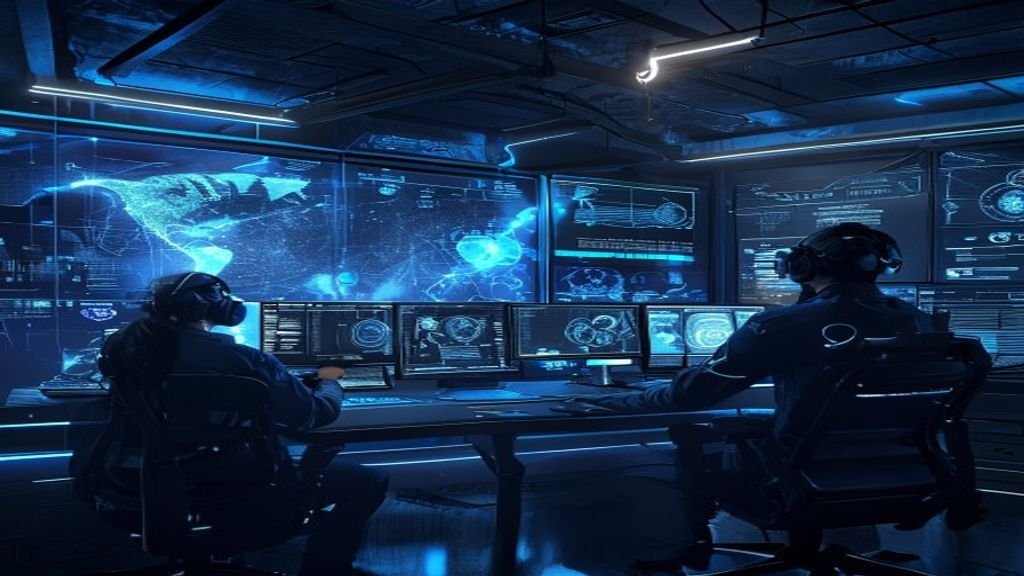
Security teams are under pressure like never before. Threat actors are faster, attack surfaces are larger, and incidents now unfold in minutes—not days. At the same time, budgets, staffing, and time for hands-on training remain constrained. That’s why AR/VR (Augmented Reality/Virtual Reality) is moving from “nice-to-have” to “must-have” for modern security programs.
AR and VR are changing how defenders learn, rehearse, and respond. They enable immersive training that builds muscle memory, strengthen decision-making under pressure, and improve coordination across technical and non-technical stakeholders. They can also support secure visualization of environments, accelerate incident simulation, and help teams understand complex systems faster.
In this article, we’ll explore why AR/VR matters more than ever for security teams, where it creates measurable value, what use cases are leading the way, and how to start without disrupting operations.
Security Is Becoming an Immersive Discipline
Traditional security training often depends on static slides, tabletop exercises, or limited lab environments. These approaches can teach concepts, but they struggle to reproduce the speed, uncertainty, and context of real incidents. Today’s security roles—SOC analysts, incident responders, penetration testers, physical security operators, cloud security engineers, and executive risk owners—must coordinate in fast-changing environments.
AR/VR shifts security from abstract learning to experiential practice. Instead of memorizing steps, teams rehearse how decisions feel in context: what they see, what they hear, what they prioritize, and how they collaborate when the clock is running.
Why “Faster” Doesn’t Mean “Betrayed” by Quality
One of the biggest misconceptions about immersive training is that it’s only for deep training cycles. In reality, AR/VR can be used for rapid refreshers, targeted skill building, and scenario-based practice between major training periods. Security teams can repeatedly practice high-risk workflows—credential resets, containment actions, isolation steps, IR comms, and evidence handling—until performance becomes consistent.
1) AR/VR Builds Training That Holds Up Under Pressure
Incidents are messy. Alerts are noisy. Evidence is incomplete. Stakeholders want answers immediately. AR/VR allows security teams to train inside realistic scenarios where they must make decisions with partial information.
Immersive Scenario Training Creates Real Decision-Making Skills
In a VR environment, teams can rehearse:
- Incident triage when multiple alerts fire simultaneously
- Containment actions that have cascading side effects
- Threat hunting using simulated logs, dashboards, and artifacts
- Physical security response for entry attempts or suspicious activity
- Communication workflows for SOC-to-IT-to-management coordination
Because the environment is interactive, learners build decision pathways rather than rote checklists. Over time, this improves both speed and quality of response.
Fewer Knowledge Gaps, More Consistent Performance
Security performance often varies across analysts and shifts. AR/VR standardizes training by delivering the same scenario structure to everyone. That means:
- New hires ramp faster with guided, repeatable practice
- Experienced staff can refresh critical skills without waiting for a full training cycle
- Teams can measure progress using repeatable scenario outcomes
For security leaders, consistency is a risk reducer.
2) AR/VR Accelerates Onboarding and Reduces Shadow Learning
One of the most expensive forms of security risk is the reliance on informal tribal knowledge. When new analysts rely on “ask around” learning, important nuances are missed—especially during unusual incidents.
AR/VR can formalize onboarding by embedding context directly into training:
- Route-based guidance for investigation workflows in VR
- Interactive overlays for AR-assisted procedures (e.g., how to inspect systems, interpret indicators, or follow approved steps)
- Hands-on familiarity with tools and processes before a real incident occurs
The result is less reliance on shadow learning and fewer mistakes caused by gaps in procedural knowledge.
3) It Makes Complex Environments Easier to Understand
Modern enterprise security spans networks, identities, endpoints, cloud infrastructure, OT/ICS environments, and third-party ecosystems. These environments are difficult to visualize. When teams struggle to “see” the system, they struggle to reason about it.
Spatial Visualization Improves Threat Comprehension
AR/VR can represent complex systems as interactive models. Security teams can walk through a virtual depiction of architecture—then overlay threat data on top of it.
For example, teams can visualize:
- Attack paths connecting identity providers, endpoints, and internal services
- Network segmentation and how lateral movement could occur
- Service dependencies that affect containment decisions
- Physical-to-digital relationships in facility security scenarios
This reduces cognitive load. Instead of reading diagrams, security analysts can explore, question, and understand relationships in a more natural way.
4) AR/VR Enhances SOC and Incident Response Readiness
During incidents, teams often face the same problems:
- Who does what?
- Where is the evidence?
- What actions are approved?
- How do we coordinate with other teams?
- How do we validate containment?
VR-based rehearsals can train these exact workflows. And because scenarios can be updated and replayed, the training can evolve alongside new threats.
Measure Performance, Not Just Participation
Unlike passive training formats, AR/VR can capture structured performance data: which steps were followed, how long decisions took, what was missed, and how teams collaborated. This enables continuous improvement and better ROI justification.
Security leaders can ask better questions:
- Are containment actions performed correctly under time pressure?
- Do analysts identify the true root cause quickly?
- Are comms and escalation patterns effective?
- Which tasks consistently take longer?
That’s actionable insight for staffing, training, and process refinement.
5) It Supports Cross-Functional Collaboration
Security incidents are rarely “just a security problem.” They impact IT operations, legal, HR, finance, facilities, and executives. Each group needs a shared understanding of what’s happening.
AR/VR can act as a common language. Instead of debating abstract terms, teams can view the same scenario and discuss it together.
Tabletop Exercises Get a Real Upgrade
Many organizations run tabletop exercises, but they can become theoretical. AR/VR makes these exercises more engaging and realistic, especially when multiple roles participate.
For example:
- Legal and compliance teams can see the operational impact of evidence handling
- Executives can understand incident timelines through interactive visualizations
- Facilities teams can coordinate with security during physical breaches
- IT operations can practice containment steps with better awareness
When stakeholders share context, decisions are faster and more aligned.
6) AR/VR Can Strengthen Physical Security and Industrial Environments
Cybersecurity is only one dimension of security. Physical security failures—tailgating, unauthorized access, suspicious behavior, unsafe process handling—often intersect with digital systems.
AR/VR offers unique advantages for physical security and industrial environments:
- VR drills for security response workflows (evacuation coordination, perimeter control, incident escalation)
- AR overlays for authorized staff to guide procedures during inspections or access control verification
- Scenario practice in high-risk zones without exposing trainees to real hazards
For OT/ICS environments, where real-world drills can be risky or expensive, simulated practice can significantly improve readiness.
7) It Helps Security Teams Keep Up With Change
Security programs evolve continuously. New systems launch, identities migrate, cloud architectures shift, and vendors update tools. Attack techniques also change daily.
With AR/VR, training content can be updated. Scenarios can be refreshed to reflect new threats, new playbooks, or new tooling. That matters because stale training is worse than no training—it can lead to incorrect assumptions during real incidents.
Continuous Learning Without Continuous Downtime
Traditional lab training takes time and resources to schedule. Immersive training can be run more efficiently, enabling more frequent practice without disrupting operations.
Common Use Cases Where AR/VR Delivers Fast Value
If you’re evaluating AR/VR, it helps to start with use cases that map directly to security team pain points. Here are high-impact options:
VR Incident Rehearsals for Playbook Mastery
- Practice containment and eradication workflows
- Simulate breach discovery and escalation
- Train on evidence collection and chain-of-custody expectations
AR-Guided Procedures for Secure Operations
- Overlay step-by-step instructions for authorized system checks
- Support compliance workflows and validated procedures
- Reduce errors during sensitive tasks (e.g., resets, migrations, forensic imaging)
Threat Visualization and Attack Path Exploration
- Interactive models of network and identity relationships
- Visualize potential lateral movement
- Improve the clarity of “why this detection matters”
Security Awareness for Technical and Non-Technical Audiences
- Simulate phishing, social engineering, and privilege misuse
- Train employees in safe, repeatable environments
- Measure comprehension with scenario outcomes
Implementation Challenges (And How to Address Them)
AR/VR isn’t magic. Successful adoption requires thoughtful planning. Below are common challenges and practical ways to mitigate them.
Challenge: Content Development Time and Cost
Building immersive scenarios from scratch can be expensive. Start with the workflows that are most costly when done wrong—then scale gradually.
Approach: Pilot with a small number of scenarios (e.g., one IR drill and one AR procedure). Use feedback loops to improve before expanding.
Challenge: Hardware, Compatibility, and User Adoption
Not every security team has the same device ecosystem. Motion sensitivity is also a factor for some users.
Approach: Choose devices that match your users’ needs, provide opt-in participation, and use comfort-friendly simulation settings. Ensure your deployment plan includes onboarding for the devices themselves.
Challenge: Integration With Existing Security Tooling
Security teams rely on SIEM, SOAR, ticketing systems, endpoint tooling, and identity platforms. If AR/VR lives outside the workflow, adoption will lag.
Approach: Design AR/VR use cases to complement existing tooling. For instance, you can use AR/VR for training and then validate learners by mapping their steps to real playbook actions and artifacts.
Challenge: Proving ROI
Leaders will ask: does this reduce risk, training time, or incident cost?
Approach: Use measurable indicators such as time-to-containment during drills, improved detection reasoning, fewer procedural errors, higher test pass rates, and reduced ramp time for new analysts.
How to Start: A Practical AR/VR Roadmap for Security Teams
If you’re ready to move beyond interest, here’s a low-risk roadmap.
Step 1: Pick One Problem With High Consequence
Choose a workflow where mistakes are expensive or where training gaps are obvious. Examples:
- Incident triage and escalation
- Containment steps for common breach patterns
- Evidence collection procedures
- Physical response workflows in critical locations
Step 2: Define Outcomes Before Building
Decide what “success” looks like. For instance:
- Reduce time to identify root cause in simulated incidents
- Increase correct escalation choices
- Improve pass rates on procedural checklists
- Strengthen cross-team coordination during rehearsals
Step 3: Run a Pilot With Real Users
Include SOC analysts, incident responders, and relevant stakeholders. Collect feedback about usability, realism, and clarity.
Step 4: Measure, Iterate, and Expand
After the pilot, refine scenarios based on performance data and user feedback. Then expand to additional use cases once you’ve proven value.
Why Now: The Convergence of Skills Gaps, Complexity, and Risk
AR/VR matters more than ever because the security landscape is colliding with three realities:
- Skills gaps are widening; organizations struggle to find experienced defenders.
- Systems complexity increases the chance of misinterpretation during incidents.
- Threat velocity punishes hesitation and slow decision-making.
Immersive training and visualization directly address these pressures. They accelerate readiness, improve comprehension, and support coordinated response.
The Bottom Line
Security teams don’t just need more training—they need training that performs. AR/VR delivers immersive, repeatable practice for incident readiness, spatial understanding for complex environments, and collaborative simulations that bring the entire organization into the response mindset.
As threats evolve and systems grow more complicated, the organizations that will win are the ones that rehearse effectively, coordinate confidently, and learn continuously. AR/VR offers a practical path toward that future—one scenario at a time.
If you’re evaluating AR/VR for security, start with a high-consequence workflow, measure performance outcomes, and expand once you’ve proven ROI. The earlier you begin, the sooner your team gains the advantage of readiness.