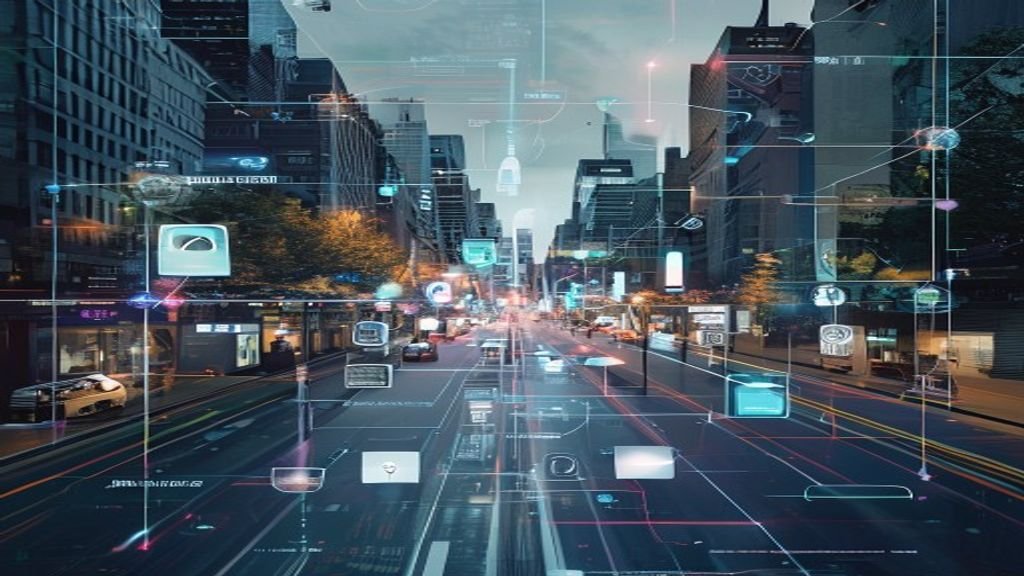
Computer vision is moving from “cool demos” to core business infrastructure. For CTOs, the question is no longer whether computer vision will matter—but how fast it will reshape operating models, budgets, security postures, and product strategy. In the next few years, the most successful teams will be those that treat vision as an end-to-end system: data, model development, deployment, monitoring, governance, and human-in-the-loop workflows.
This article breaks down the biggest trends and practical predictions that CTOs should plan for now, with emphasis on architecture choices, team capabilities, and responsible deployment.
Why the Next Wave of Computer Vision Will Be Different
Early computer vision was dominated by handcrafted features and brittle pipelines. Today, deep learning has made visual understanding more accurate and more scalable. But the future isn’t simply “better accuracy.” It’s about:
- Reliability in changing real-world conditions (lighting, camera drift, domain shifts)
- Latency and cost control for edge and cloud inference
- Governance and compliance for privacy, consent, and auditability
- Systems integration across sensors, enterprise workflows, and automation
- Continuous improvement via monitoring, labeling, and retraining loops
CTOs should expect computer vision to become a “product line” inside the engineering organization—just like data platforms or payment systems—with clear SLAs, operational metrics, and governance.
Trend #1: Multimodal Vision Becomes the Default
What changes
Vision models are increasingly combined with language, audio, sensor telemetry, and structured data. Instead of only answering “what is in the image,” future systems will be able to answer “why it matters,” “what to do next,” and “how confident we are,” leveraging multimodal context.
What CTOs should do
- Plan for multimodal architectures: design APIs that accept both images and metadata (device IDs, timestamps, camera calibration, user context).
- Invest in prompt/intent layers: use controllable interfaces so the system is not just a black-box captioning engine.
- Adopt evaluation standards beyond accuracy: measure robustness, calibration quality, and task success rates.
Trend #2: Vision Models Move Closer to the Edge
What changes
Many use cases—manufacturing inspection, retail analytics, safety monitoring, autonomous robotics—require real-time decisions and low bandwidth. This drives inference to edge devices: GPUs, NPUs, and specialized accelerators.
Key architectural implications
- Model compression and optimization: quantization, pruning, distillation, and graph-level optimizations.
- Edge orchestration: update management, rollback strategies, and device health monitoring.
- Fallback strategies: when edge confidence drops, route to a more capable service or request human review.
What CTOs should do
- Build a unified deployment pipeline that supports cloud and edge artifacts.
- Create performance budgets (latency, power, and cost per inference) early—not as an afterthought.
- Standardize telemetry schemas so you can compare edge vs. cloud behavior.
Trend #3: Continual Learning and Active Monitoring Replace One-Time Training
What changes
In real environments, data drifts: seasons change, cameras age, backgrounds vary, and operational procedures evolve. The future vision stack treats learning as a continuous process, powered by monitoring, labeling, and retraining triggers.
What CTOs should implement
- Data and model observability: track input distributions, confidence histograms, and error clusters.
- Uncertainty-aware pipelines: treat low-confidence predictions as signals to verify or escalate.
- Active learning loops: prioritize the most informative samples for annotation.
- Versioned datasets and models: guarantee reproducibility for audits and incident response.
This is where CTOs can gain the biggest operational advantage: the organizations that monitor first and retrain intelligently will outperform those that retrain on static schedules.
Trend #4: Responsible Computer Vision Becomes a Competitive Advantage
What changes
Privacy concerns, bias, and misuse risks are rising. Regulators and enterprise buyers increasingly demand transparency: how data is collected, how consent is handled, what retention policies exist, and how models are tested across demographics and edge cases.
What CTOs should do
- Adopt privacy-by-design: minimize data retention, use anonymization where possible, and separate identifiable from non-identifiable streams.
- Document model behavior: create model cards, data sheets, and risk assessments.
- Establish bias and fairness testing: define metrics and gating criteria for release.
- Implement access controls: restrict who can query sensitive images and enforce audit logs.
Responsible vision is not just compliance. It reduces production incidents, prevents reputational risk, and improves customer trust—often translating directly into sales velocity.
Trend #5: Vision-as-a-Platform, Not Vision-as-a-Project
What changes
Many companies initially build vision features as one-off projects. The future belongs to teams that create reusable platform capabilities: annotation tools, feature extractors, model evaluation harnesses, deployment tooling, and standardized monitoring dashboards.
Platform components CTOs should consider
- Vision data layer: ingestion pipelines, labeling workflows, and dataset versioning.
- Model development layer: training frameworks, baseline model management, and experimentation tracking.
- Evaluation layer: test suites by camera type, environment, and task.
- Deployment layer: CI/CD for model artifacts, canary releases, and A/B testing.
- Operational layer: alerting, drift detection, and continuous improvement workflows.
If you want to scale vision across multiple business units, invest in platformization early. It reduces time-to-market and prevents repeated reinvention.
Trend #6: Synthetic Data and Simulation Gain Real Leverage
What changes
High-quality labeled data is expensive and sometimes impossible to obtain for rare events (defects, edge cases, unusual scenes). Synthetic data and simulation—especially when combined with domain randomization—are becoming core tools.
Where synthetic data helps most
- Rare-class detection (low-frequency defects)
- Hazard scenarios in safety monitoring
- Camera pose and lighting variations that would be costly to collect
- Pre-training or warm-starting models before fine-tuning on real data
What CTOs should do
- Measure transfer quality explicitly: synthetic-to-real performance is not guaranteed.
- Maintain traceability: keep datasets organized by generation parameters.
- Use simulation to test system behavior under stress, not just model metrics.
Trend #7: Foundation Models and Task-Specific Adaptation
What changes
General-purpose vision foundation models will lower the barrier to entry. But most production tasks will still require fine-tuning, prompt-like controls, or adapters (e.g., low-rank adaptation approaches) to meet domain requirements.
Prediction for CTO strategy
CTOs will increasingly allocate budget between two lanes:
- Model foundation procurement or licensing (time-to-market)
- Domain adaptation and evaluation (business reliability)
Foundation models accelerate experimentation, but your differentiator will be system integration and evaluation rigor.
Trend #8: Human-in-the-Loop Workflows Become Standard
What changes
Even with high-performing models, production uncertainty remains. Human oversight will be integrated into workflows—not as a manual process after failure, but as a proactive decision layer.
Practical patterns
- Escalate low-confidence cases to reviewers
- Use bounding-box and segmentation suggestions to speed labeling
- Capture operator feedback to refine policies and training data
- Automate quality checks so humans only focus on the hardest examples
For CTOs, the key is designing the loop so feedback becomes data that improves models, rather than a stranded annotation effort.
Trend #9: Computer Vision Will Drive New Automation Roles
What changes
As vision systems become reliable enough, they will reshape org structure. Roles like vision ops engineers, model reliability leads, annotation program managers, and drift response owners will become more common.
CTO prediction
Vision will evolve from a purely ML problem into a cross-functional operating discipline. Expect closer alignment between engineering, security, legal/compliance, and product operations.
Trend #10: Security Threats and Adversarial Risk Will Be Treated as First-Class Concerns
What changes
Vision systems face threats like adversarial examples, spoofing attacks (e.g., printed patterns, replay attacks), and data poisoning in training pipelines. As deployments expand, these risks become operational realities.
What CTOs should implement
- Robustness testing: evaluate under perturbations and sensor variations.
- Input validation: detect out-of-distribution inputs and suspicious patterns.
- Secure data pipelines: protect labeling systems, ensure dataset provenance, and monitor for poisoning signals.
- Red teaming: treat it like security engineering, with repeatable test scenarios.
How CTOs Should Plan a 12–24 Month Vision Roadmap
Below is a practical roadmap you can adapt. The goal is not to chase every trend, but to build a durable foundation for multiple use cases.
Phase 1: Build the Vision Operating System (0–6 months)
- Define measurable KPIs: accuracy by segment, latency, cost per inference, escalation rate, time-to-retrain.
- Create an evaluation harness with real-world test sets and synthetic stress cases.
- Implement baseline observability: confidence, drift, and error taxonomy.
- Establish data governance: labeling policy, dataset versioning, retention, and audit trails.
Phase 2: Operationalize Deployment (6–12 months)
- Set up CI/CD for models: canary releases and rollback procedures.
- Integrate human-in-the-loop for uncertain cases and continuously improve data quality.
- Introduce edge or hybrid deployment where latency/cost demands it.
- Harden security: robustness tests, data provenance checks, and access controls.
Phase 3: Scale Across Use Cases (12–24 months)
- Standardize platform components so new teams can reuse tooling.
- Expand multimodal capabilities: image + context + workflow actions.
- Introduce active learning and continual improvement loops.
- Invest in organizational roles and training: vision ops, reliability, and responsible AI practices.
Common Pitfalls CTOs Should Avoid
- Optimizing only for offline metrics while ignoring real-world latency, drift, and failure modes.
- Underinvesting in data governance, leading to rework and compliance risks.
- Skipping observability until after launch, when debugging becomes expensive.
- Treating labeling as a one-time cost rather than an evolving system.
- Overbuilding models before defining workflows: vision must map to actions, not just predictions.
Predictions You Can Act On Now
Here are clear predictions likely to matter for CTOs:
- Multimodal vision will become a standard product interface, not a research feature.
- Edge inference will accelerate as organizations demand cost and latency reductions.
- Continuous monitoring and retraining will outcompete static training schedules in reliability and ROI.
- Responsible AI controls will move upstream into development pipelines and release gating.
- Vision platforms will replace ad-hoc pipelines, enabling faster scaling across domains.
What Great CTO Leadership Looks Like in the Vision Era
To lead successfully, CTOs should balance innovation with operational discipline. That means funding the “invisible work”—data pipelines, evaluation suites, monitoring, security, and governance—alongside model research. The competitive advantage won’t come solely from which architecture you choose, but from how consistently you can deliver reliable outcomes in messy, real-world settings.
Computer vision’s future is not just brighter predictions. It’s smarter systems—systems you can trust, secure, scale, and continuously improve.