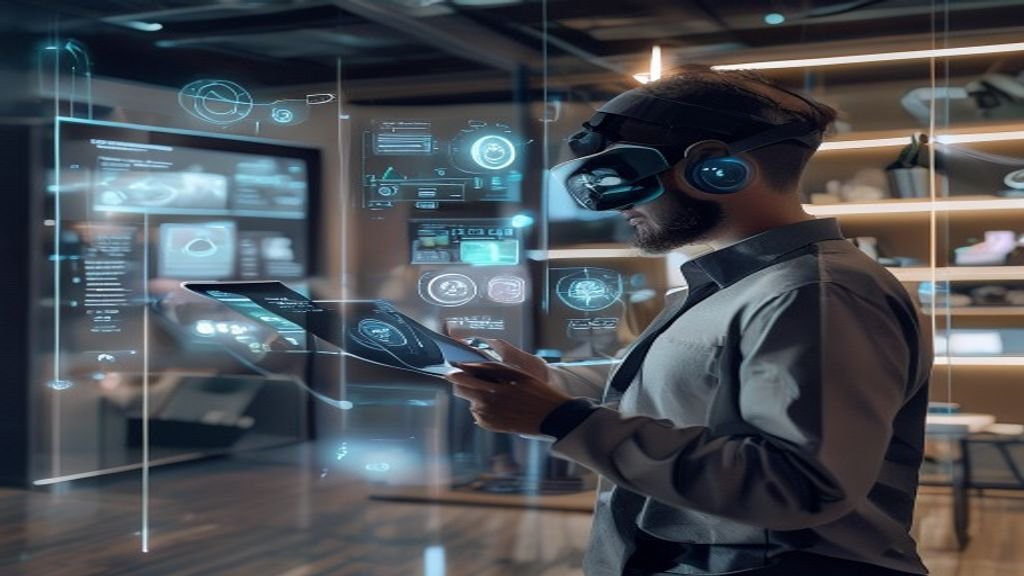
Marketing is changing fast. Not just because channels evolve, but because the way people experience information is evolving. Spatial computing—often associated with AR, VR, mixed reality (MR), and 3D digital interfaces—promises a shift from “screen-based” marketing to space-based interactions. But should marketers move now, or stick with what’s proven: search, social, email, landing pages, video, and conventional display formats?
In this guide, we’ll compare Spatial Computing vs Traditional Methods through a marketer’s lens: performance, customer experience, creative production, measurement, budget trade-offs, and real-world use cases. The goal isn’t to crown a winner—it’s to help you decide what’s better for your brand.
What “Spatial Computing” Means for Marketers
Spatial computing is the set of technologies that let digital content understand and interact with the physical world. For marketing, that usually means experiences that feel anchored in a real environment:
- AR try-ons that map products to a user’s body or environment.
- 3D product viewing with real-world scale and perspective.
- Location-aware experiences using cameras, sensors, or device-based mapping.
- Immersive brand activations in VR or MR showrooms.
- Spatial interfaces (voice, gesture, gaze) that reduce friction in discovery.
Instead of telling customers what your product looks like, you can let them see it where it would exist. That can change conversion dynamics, not just engagement levels.
What “Traditional Methods” Include (and Why They Still Win)
Traditional marketing methods are not “old”—they’re just largely screen-first and funnel-oriented. Common approaches include:
- Search ads and SEO (intent-based discovery).
- Social media (reach, content, retargeting).
- Email and marketing automation (lifecycle conversion).
- Landing pages and CRO (conversion optimization).
- Video (storytelling and explainers).
- Display and retargeting (frequency and reminder loops).
These methods are powerful because they’re highly measurable, scalable, and familiar to buying behavior. When marketers need predictable performance and efficient scaling, traditional channels often remain the default choice.
Spatial Computing vs Traditional Methods: The Core Differences
To decide “which is better,” you need to compare the mechanics and outcomes of each approach.
1) Engagement Model: Watching vs Interacting
Traditional marketing often asks customers to watch, read, or click. Spatial computing asks them to interact.
- Traditional: “Here’s a video/photo. Imagine the product.”
- Spatial: “Here’s the product in your space. Try it now.”
That interaction can reduce uncertainty and boost confidence—especially for products that are hard to evaluate digitally (e.g., size, fit, texture, color accuracy, or room compatibility).
2) Customer Journey: Linear Funnel vs Real-Time Discovery
Traditional marketing is built around funnels: awareness → consideration → conversion. Spatial experiences can compress stages by enabling hands-on evaluation.
For example, AR try-ons allow a user to evaluate fit and style immediately, reducing the need for repeated content touches.
3) Value Proposition: Information Delivery vs Experience Delivery
Traditional methods excel at delivering information at scale. Spatial computing is strongest when your brand value comes from experience rather than just features.
Luxury, fashion, sportswear, home improvement, automotive, travel, and entertainment often benefit first because their purchase decisions are strongly influenced by how things look and feel in context.
4) Friction: Clicks and Waits vs Instantly Relevant Context
Traditional marketing can introduce friction: landing pages load, users must imagine scale, and visual accuracy depends on photos. Spatial computing can shorten the distance between curiosity and evaluation.
However, spatial experiences introduce their own friction (hardware compatibility, setup, and content loading). The “best” approach depends on how much friction your audience will tolerate.
Which Is Better for Marketers? A Practical Comparison
Instead of debating in theory, let’s compare by marketing goals.
Best for Brand Awareness: Spatial Computing can be a differentiator
If your goal is to stand out, spatial experiences can create memorable “wow moments.” People share experiences that feel novel and personal. That can drive earned media and social buzz.
Traditional strengths: broad reach and efficient awareness at lower friction.
Spatial strengths: emotional resonance and high shareability when done well.
Winner depends on budget and audience: For premium brands or campaigns aiming for virality and differentiation, spatial computing can outperform. For mass awareness at scale, traditional is often more efficient.
Best for Consideration: Spatial computing often wins
Consideration is where customers compare options and test fit. Spatial computing excels because it turns product evaluation into a live simulation.
- Apparel: AR fit and style preview.
- Beauty: shade matching in context.
- Home goods: room placement, scale checks, finishes.
- Eyewear: virtual try-on from multiple angles.
Traditional methods can support consideration too, but they’re usually more indirect—reviews, videos, demos, and photos. Spatial can reduce the guesswork that causes drop-offs.
Best for Conversion: Both can work—spatial can reduce returns
Conversion performance depends on your product complexity and the clarity users need to buy. Spatial computing can increase conversions by:
- improving product understanding
- reducing uncertainty
- making personalization feel effortless
- moving evaluation earlier in the journey
There’s also a hidden ROI: fewer returns. When customers can visualize fit, color, or scale accurately, you may see lower dissatisfaction-driven returns.
Traditional advantage: established sales pathways, optimized landing pages, and strong intent targeting through search.
Best strategy for many brands: Use spatial to improve confidence and use traditional conversion infrastructure (cart, email follow-ups, retargeting) to close the sale.
Best for Retention and Loyalty: Traditional lifecycle programs still lead
Retention depends on consistency: emails, content cadence, loyalty programs, and community building. Spatial can enhance retention, but it’s rarely the sole driver.
That said, spatial experiences can make loyalty more tangible:
- members unlock exclusive 3D content
- new releases become AR-based drops
- events include spatial collectibles
Traditional lifecycle marketing remains the backbone; spatial can become a premium “layer” on top.
Best for Measurement: Traditional methods are easier to track
Marketers love certainty. Traditional campaigns have mature tracking models—attribution windows, conversion pixels, and established dashboards.
Spatial computing introduces measurement challenges:
- device and platform fragmentation
- different interaction types (gaze, gesture, walk-around)
- privacy constraints
- harder “last-click” attribution
That doesn’t mean spatial is unmeasurable. It means you may need a measurement strategy that blends interaction analytics (engagement, dwell time, conversions after try-on) with assisted conversion tracking.
Where Spatial Computing Really Beats Traditional Methods
Spatial computing tends to outperform when your marketing problem includes one or more of the following:
- High visual/physical realism needs: color, texture, scale, fit, or spatial arrangement matters.
- Consideration is complex: customers need to evaluate multiple options.
- Products benefit from context: e.g., furniture in a room, makeup on a face, fixtures in a home.
- Customer experience is part of the brand: luxury, design-led, experiential brands.
- Competitive differentiation is hard with standard content: your products need more than photos and claims.
Where Traditional Methods Still Win (and You Should Keep Them)
Traditional methods remain superior when:
- You need immediate scale across broad audiences.
- Budget and production speed matter more than novelty.
- Your offer is simple and doesn’t require spatial evaluation.
- Your audience has limited access to the hardware needed for spatial experiences.
- You rely on search intent to drive sales efficiently.
In other words, traditional methods aren’t obsolete—they’re the performance engine. Spatial is the experience engine.
Cost, Production, and Time to Launch: What Marketers Should Expect
Let’s talk reality. Spatial computing projects can require:
- 3D asset creation or optimization
- mapping, scanning, or model cleanup
- platform testing across devices
- UI/UX design for spatial interactions
- QA for performance and usability
Traditional campaigns can be faster: a new landing page, refreshed creatives, updated copy, new budget allocation. That speed can be a decisive advantage.
However: many spatial experiences can be repurposed. Once you have a high-quality 3D model, you can reuse it for multiple campaigns—seasonal colors, new bundles, different regions, and different placements.
Strategic Answer: It’s Not Spatial vs Traditional—It’s Spatial + Traditional
The best approach for most marketers isn’t choosing one forever. It’s building a hybrid system that uses spatial computing where it creates measurable advantage and uses traditional methods where they deliver scale and efficiency.
A high-performing hybrid model
- Use traditional channels for demand capture: search, paid social, email sequences, retargeting.
- Use spatial experiences for product evaluation: AR try-on, 3D viewing, room placement, interactive demos.
- Use CRO to convert: landing pages, live inventory, shipping clarity, social proof.
- Use lifecycle messaging to close the loop: send follow-ups based on interaction behavior.
Use Case Ideas by Industry
Here are concrete spatial opportunities marketers can pilot without boiling the ocean.
Retail and eCommerce
- AR product visualization for top-selling SKUs
- Color selection tools that show accurate shading
- Virtual try-on for apparel and eyewear
Home and Furniture
- Room placement with scale-aware positioning
- Lighting mode preview (day/night)
- Bundle builders that let users assemble packages
Automotive
- 3D car configurators with realistic viewing angles
- AR showroom experiences at dealerships or events
- Spatial brochures that feel like “walk-around” catalogs
Beauty and Personal Care
- Shade matching in context
- Step-by-step application demos with MR overlays
- Personalized recommendations based on user interaction
Travel and Hospitality
- MR previews of rooms, views, and experiences
- Interactive destination highlights (wayfinding, landmarks)
- Immersive event experiences for loyalty members
How to Decide: A Simple Framework for Marketers
Use these questions to determine whether spatial computing is “better” for your brand right now:
- Does the purchase depend on spatial realism? If yes, spatial helps.
- Are you losing customers due to uncertainty? If yes, spatial can reduce guesswork.
- Do you have or can you create strong 3D assets? If yes, pilot faster.
- Can you track outcomes beyond clicks? If yes, you can prove ROI.
- Will your audience likely engage? If yes, spatial is worth testing.
Metrics That Matter for Spatial Campaigns
Traditional KPIs still matter (CTR, conversions, CAC). But spatial also introduces unique engagement metrics.
Consider tracking:
- Interaction rate: how many users launch and complete the experience
- Try-on success rate: how often users successfully complete AR fit/shade checks
- Time in experience: dwell time and repeated sessions
- Feature usage: rotations, placements, color changes
- Assisted conversions: purchases after spatial engagement
- Return rate changes: comparisons vs non-spatial cohorts
In short: treat spatial as a conversion accelerator, not just a new ad format.
Common Mistakes Marketers Make with Spatial Computing
- Overbuilding: starting with a full VR universe instead of a focused AR try-on.
- Ignoring device reality: testing late and discovering performance issues.
- Choosing gimmicks over outcomes: novelty without a clear business goal.
- Not integrating with the funnel: spatial experiences that don’t lead to follow-up or conversion paths.
- Under-measuring: relying only on last-click attribution and missing assisted impacts.
So, Which Is Better? The Marketer’s Verdict
If your question is “Which one is better overall?” the honest answer is: it depends on your category, audience, and objectives. But we can be decisive about the direction.
- Traditional methods are better for: reach, efficiency, mature measurement, and rapid scale.
- Spatial computing is better for: product evaluation, reducing uncertainty, and delivering premium, memorable experiences—especially when visual/physical context matters.
For most modern marketers, the winning strategy is a hybrid roadmap: use traditional methods to drive demand and trust, then use spatial computing to let customers experience the product in context—turning consideration into confidence and confidence into conversion.
Next Steps: How to Pilot Spatial Without Risk
If you want to explore spatial computing this quarter, start with a pilot that’s narrow, measurable, and tied to a clear business metric:
- Choose one high-impact product category (e.g., best sellers with fit/color uncertainty).
- Create a single spatial experience (AR try-on or 3D room placement).
- Drive traffic from traditional channels to the experience.
- Measure assisted conversions and engagement metrics.
- Iterate on performance and UX, then expand to more SKUs.
Done right, spatial computing doesn’t replace traditional marketing—it upgrades the customer’s understanding of your offer. And in 2026, that upgrade may be the difference between being ignored and being chosen.