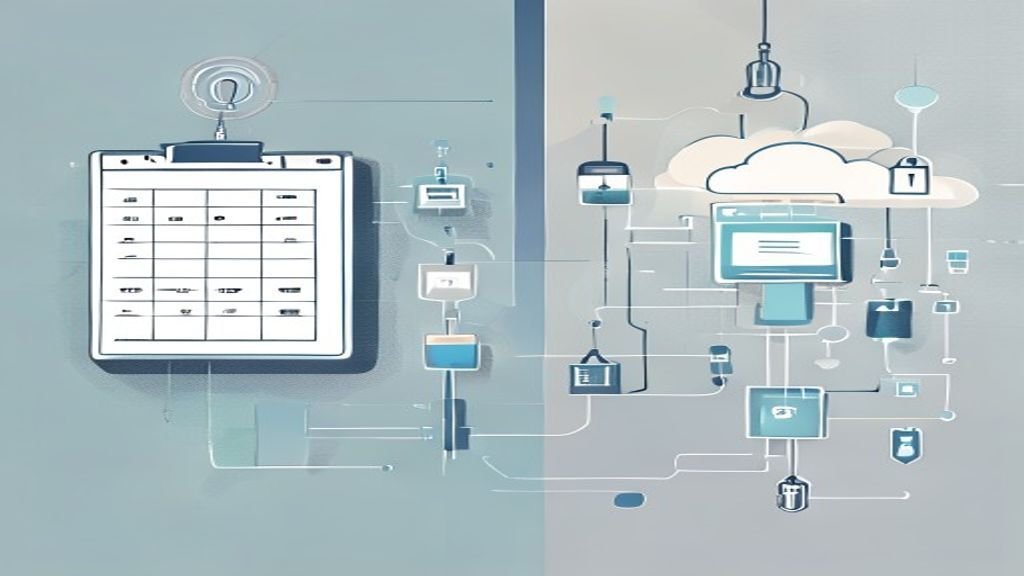
Developers rarely ask a question as simple as “IoT or not?”—because in real systems, the answer is about trade-offs: latency, reliability, cost, security, observability, integration complexity, and long-term maintainability. This guide breaks down IoT vs traditional methods from a developer’s perspective, with concrete decision points, architecture patterns, and implementation guidance.
If you build connected products, industrial systems, smart buildings, logistics platforms, or even internal operations dashboards, you’ve likely seen the pressure to “add IoT.” The real question is: when does IoT outperform traditional approaches, and when does it just add complexity?
What “Traditional Methods” Means for Developers
“Traditional methods” is a broad umbrella, but for the purposes of this comparison it usually includes:
- Manual data entry (spreadsheets, forms, operator logs)
- Batch data collection (periodic uploads rather than continuous streams)
- On-prem or centralized instrumentation with limited connectivity
- Scheduled polling
- Event handling inside a single system (monolith or tightly coupled services) without large-scale edge-to-cloud pipelines
In contrast, IoT typically means distributed devices generating streaming telemetry (sensors, actuators, gateways) and sending data over networks to backends for processing, alerting, and control.
What IoT Adds: The Developer’s View
IoT is not just “a device connected to the internet.” In practice, IoT introduces a full toolchain of challenges and opportunities:
- Edge computing: preprocess, filter, compress, or infer locally
- Device identity & provisioning: secure enrollment and lifecycle management
- Telemetry pipelines: ingestion, normalization, schema management, retention
- Near-real-time analytics: alerting, dashboards, anomaly detection
- Bidirectional control: commands to devices with safety constraints
- Fleet management: firmware updates, diagnostics, health monitoring
For developers, IoT is often less about writing a single service and more about orchestrating many moving parts reliably.
IoT vs Traditional Methods: A Head-to-Head Comparison
Here’s a practical comparison across the dimensions that typically matter most in engineering reviews.
1) Data Freshness & Latency
- IoT: Continuous streaming enables real-time or near-real-time decision making. Alerts can trigger in seconds or milliseconds depending on architecture.
- Traditional: Batch or manual methods are usually delayed (hours, days, or scheduled intervals). Great for reporting, weaker for control loops.
Developer takeaway: If you need timely reactions (e.g., safety thresholds, equipment failure warnings, dynamic routing), IoT is usually the better fit.
2) Reliability & Operational Resilience
- IoT: Devices are distributed and unreliable by nature (intermittent connectivity, power issues, sensor drift). Your system needs retries, buffering, idempotency, and backpressure.
- Traditional: When data entry or centralized polling is stable, reliability is simpler. Fewer failure domains.
Developer takeaway: IoT can be reliable, but only if you design for offline behavior and eventual consistency. Without that, traditional methods can be more dependable.
3) Integration Complexity
- IoT: Requires integration across firmware/edge, message brokers, cloud services, databases, and sometimes third-party analytics.
- Traditional: Often integrates cleanly with existing back-office systems (ERP, CRM, ticketing) through batch jobs and APIs.
Developer takeaway: If your organization already has strong streaming infrastructure, IoT integration cost is manageable. If not, plan for the learning curve.
4) Security & Threat Surface
- IoT: Expands the attack surface: physical devices, credential storage, firmware vulnerabilities, insecure protocols, and fleet scale provisioning.
- Traditional: Fewer external endpoints. Security is mostly about web apps and internal APIs.
Developer takeaway: IoT demands security-by-design: mutual TLS, device certificates, secure boot, signed firmware, secrets management, and network segmentation.
5) Cost Model: Hardware + Engineering vs Simplicity
- IoT: Costs include sensors, gateways, power management, connectivity plans, message ingestion, storage, and ongoing device maintenance (including firmware updates).
- Traditional: Often cheaper initially: no sensors to buy, fewer infrastructure components, less ongoing device management.
Developer takeaway: IoT pays off when it reduces operational cost or unlocks new revenue/efficiency—otherwise it can be a net cost center.
6) Maintainability & Long-Term Evolution
- IoT: Schema evolution and backward compatibility are tricky because devices ship in the field for years. You must design for heterogeneous firmware versions.
- Traditional: Fewer moving parts and faster iteration because data producers are usually software you control (not devices in the wild).
Developer takeaway: If you can’t commit to versioning, migration strategies, and fleet observability, stick to traditional methods or adopt IoT incrementally.
When IoT Is Clearly Better (Good Use Cases)
IoT tends to outperform traditional approaches when the problem domain benefits from continuous sensing, fast feedback, and distributed visibility.
Operational Monitoring & Predictive Maintenance
- Condition monitoring for motors, HVAC, pumps, or manufacturing equipment
- Early detection of anomalies based on trends rather than periodic checks
Asset Tracking & Logistics Visibility
- Real-time location updates
- Route optimization based on sensor data (temperature, door open events, vibration)
Smart Buildings and Energy Optimization
- Occupancy-aware control
- Demand response automation
Safety-Critical or Threshold-Based Alerting
- Fire detection, gas leakage monitoring, industrial hazard thresholds
- Rapid event propagation for human response or automated shutdown
When Traditional Methods Are Better (and Why)
Traditional approaches often win when the cost of distributed systems outweighs the benefits of continuous data.
Low-Frequency or Low-Value Data
- Weekly inventory counts
- Periodic audits
- Reports that don’t drive immediate actions
Environments with Limited Connectivity
- Remote sites without stable networks
- Where deploying and maintaining devices is impractical
Note: IoT can still work offline using local buffering and later synchronization, but engineering effort increases.
Early MVP Stages Without a Clear Payoff
- When business requirements are still evolving
- When you need proof of value quickly
Developer takeaway: Start with a minimal pipeline for validated metrics. Add IoT later once you know which signals matter.
Architecture Patterns Developers Can Use
To decide effectively, it helps to understand what IoT architectures typically look like. Here are common patterns and how they compare to traditional designs.
Pattern A: Request/Response vs Telemetry Streaming
- Traditional: Services often expose REST/GraphQL endpoints. Clients request data when needed.
- IoT: Devices push telemetry continuously (MQTT/HTTP/WebSockets) and services consume messages from queues or brokers.
Implication: Your data model and operational tooling must handle volume and time-series semantics.
Pattern B: Centralized vs Edge-Enhanced Processing
- Traditional: Data is collected centrally for processing.
- IoT: Edge can filter, aggregate, downsample, or run lightweight inference to reduce bandwidth and latency.
Implication: You’ll manage both device software and cloud logic.
Pattern C: RDBMS-First vs Time-Series-First Storage
- Traditional: Relational databases work well for transactional records and periodic summaries.
- IoT: Time-series storage is often better for querying trends and anomalies (with retention policies and downsampling).
Security and Compliance: The Non-Negotiables for IoT
If you’re comparing IoT and traditional methods, security isn’t an optional checklist item—it changes how you design from the start.
Key IoT Security Controls
- Device identity: unique certificates per device, not shared credentials
- Secure transport: TLS with mutual authentication
- Secure boot and signed firmware: prevent tampering
- Least privilege: scoped tokens for device actions
- Audit logs: track command issuance, config changes, and device events
Compliance Considerations
- Data retention and privacy: what telemetry is collected, for how long, and why
- Incident response: how you revoke credentials and patch fleets
- Physical security: device hardening and tamper resistance
Developer takeaway: Traditional methods reduce some security complexity but don’t eliminate it—especially if you handle sensitive data. IoT just multiplies the number of endpoints and operational scenarios.
Observability: Debugging Distributed Reality
One of the biggest developer pain points in IoT is diagnosing issues across devices, networks, ingestion services, and analytics pipelines.
What You Need for IoT Observability
- Device health metrics: uptime, last-seen timestamps, battery/CPU, sensor calibration status
- Message-level tracing: correlation IDs across edge and cloud
- Data quality checks: detect missing fields, out-of-range values, unit mismatches
- Alerting on pipeline failures: stuck consumers, broker backlog, schema validation errors
Traditional systems can rely on fewer layers. In IoT, you must assume partial failures and build monitoring around them.
Developer Workflow Impact: Teams, Tooling, and Skills
Choosing IoT affects staffing and delivery processes.
What Skills IoT Usually Requires
- Embedded/edge development (C/C++/Rust/Go, or vendor SDKs)
- Streaming and event-driven backend engineering
- Security engineering for certificate management and firmware supply chain
- Data engineering for time-series pipelines and schema versioning
How Delivery Changes
- Firmware release trains and staged rollouts (canary devices)
- Long-lived compatibility: supporting older device versions
- Testing harder to replicate: RF/network conditions, sensor variability, physical deployment
Developer takeaway: If your team can’t support these workflows, traditional methods may deliver results faster.
Cost-Benefit: How to Decide Without Guessing
Instead of debating in abstract terms, use a concrete scoring model. Here’s a simple checklist you can apply during architecture planning.
Questions to Ask
- Do we need near-real-time decisions? If yes, lean IoT.
- What’s the cost of being wrong or late? Safety and SLA impact push toward IoT.
- How frequently do signals change? Rapid changes favor streaming.
- What is our deployment environment? Connectivity and physical access affect design.
- Can we maintain a fleet? If not, consider traditional or hybrid.
- What is our security maturity? IoT raises the bar for identity and firmware integrity.
- Do we already have time-series infrastructure? If not, budget for it.
Build a Hybrid Strategy
Many “IoT vs traditional” decisions actually become hybrid designs:
- Use IoT for high-value signals (e.g., temperature spikes, door events)
- Use traditional batch ingestion for low-value metrics (e.g., monthly summaries)
- Allow graceful degradation: if devices fail, fall back to manual processes
Developer takeaway: Hybrid approaches often minimize risk while still capturing the benefits of IoT.
Practical Implementation Tips for Developers
If you’re leaning IoT, these tips prevent common pitfalls.
1) Start With “Signal Worthiness”
Before buying hardware, validate that specific signals drive outcomes. Prototype with temporary sensors or even manual measurement plus a staging ingestion pipeline.
2) Design for Schema Evolution
- Include version fields in messages
- Use backward-compatible changes
- Keep conversion logic in ingestion services
3) Implement Idempotency and Backpressure
- Assume duplicates
- Use message IDs and idempotent writes
- Handle slow consumers with buffering and controlled retry policies
4) Treat Device Provisioning as a First-Class Product
Automate enrollment, certificate issuance, and lifecycle states. The fastest path to operational failure is manual provisioning at scale.
5) Build an Operator Console
Developers often focus on dashboards, but operations needs tools too: device status, last-seen, firmware version, data gaps, and command history.
So… Which Is Better for Developers?
IoT is better when continuous sensing, timely automation, and distributed visibility are core to your product value. It enables richer analytics and faster reaction loops, but it requires a serious investment in security, observability, resilience, and fleet lifecycle management.
Traditional methods are better when simplicity, low cost, and predictable data collection matter more than real-time responsiveness. They reduce the number of failure domains and shorten feedback loops during early development.
For most teams, the winning strategy is not “IoT vs traditional,” but rather:
- Use traditional methods where they’re sufficient (stable, low-frequency, non-critical metrics)
- Introduce IoT where it creates measurable operational or user value
- Design hybrid fallbacks so the system degrades gracefully
Final Checklist: Your Decision in One Minute
- If you need seconds-level alerts or control → favor IoT
- If you need daily/weekly reporting → favor traditional
- If you can’t support device security and fleet operations → consider hybrid or delay IoT
- If you can build streaming pipelines and observability → IoT can be a competitive advantage
Ultimately, the “better” choice is the one that matches your latency requirements, risk tolerance, security maturity, and operational capacity. If you align those constraints up front, developers can ship faster, safer systems—whether that means IoT, traditional methods, or a carefully engineered blend of both.