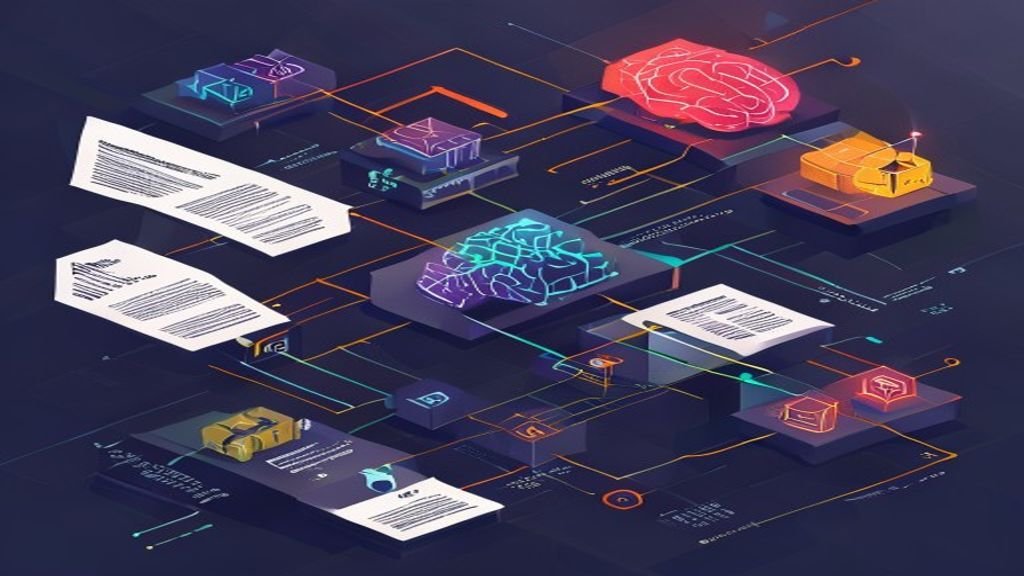
Retrieval-Augmented Generation (RAG) has become one of the most practical ways to build systems that answer questions using your own data. Instead of relying purely on a model’s memory, RAG retrieves relevant context from documents and then generates an answer grounded in that retrieved information. The result is often more accurate, more up-to-date, and easier to align with enterprise knowledge.
But RAG is not “set it and forget it.” In real deployments, teams face recurring challenges—retrieval misses, context bloat, hallucinations, evaluation gaps, and operational issues like latency and cost. This article breaks down the most common RAG problems and offers concrete, implementation-oriented solutions you can apply immediately.
What makes RAG challenging in practice?
At a high level, RAG looks simple: ingest documents, chunk them, embed them, retrieve relevant chunks, and feed them to a generator. In practice, each stage can fail:
- Retrieval can miss the right evidence or return irrelevant passages.
- Chunking decisions affect semantic quality and whether evidence is complete.
- Ranking and query formulation can be brittle across question types.
- Generation can ignore context or over-generalize when retrieval is imperfect.
- Evaluation is hard because “correctness” is nuanced.
Most RAG failures come from the system being only as strong as its weakest component. Let’s examine the top challenges—and what to do about them.
1) Poor retrieval: the system can’t find the right context
If RAG can’t retrieve relevant documents, the generator has nothing reliable to work with. This shows up as confident but wrong answers, missing key details, or responses that appear to “guess.”
Common causes
- Embedding mismatch: the embedding model doesn’t represent your domain well.
- Overly coarse or overly fine chunking: evidence gets split or becomes diluted.
- Synonym and terminology gaps: queries use terms that differ from documents.
- Query-document mismatch: user questions require cross-sentence reasoning that chunking breaks.
Practical solutions
- Improve chunking strategy: aim for chunks that balance recall and completeness. Consider dynamic chunk sizes, overlap, and structure-aware chunking (e.g., headings, tables, sections).
- Use hybrid retrieval: combine semantic embeddings with keyword search (BM25). Hybrid approaches often outperform pure vector search for factual queries and rare terms.
- Adopt better query understanding: rewrite user queries using a lightweight model (query expansion) or use multi-query retrieval for different phrasings.
- Rerank retrieved candidates: apply a cross-encoder reranker to reorder top-k results by true relevance before generation.
- Handle multi-hop questions: retrieve in stages (e.g., first identify relevant sections, then retrieve supporting details inside them).
2) Retrieval returns irrelevant or low-quality passages
Sometimes RAG retrieves the “wrong” evidence even when relevant content exists. This can happen due to embedding similarity artifacts, broad topics, or poorly structured documents.
Signs you have this problem
- Answers include tangential information.
- The response cites passages that don’t clearly support the claim.
- Top-k results include many near-duplicate or boilerplate sections.
Practical solutions
- Increase precision with reranking: a reranker can reduce semantic “false neighbors.”
- Use metadata filters: constrain retrieval by document type, product line, time range, language, or access level.
- De-duplicate and cluster: remove near-duplicates and group similar chunks so the generator sees diverse evidence.
- Introduce a relevance threshold: if top results score below a cutoff, respond with uncertainty or request clarification.
- Apply query-time constraints: for example, if the user asks about pricing, filter to pricing pages or sections.
3) Context window bloat: too much retrieved text hurts answers
RAG systems often retrieve too many chunks, or chunks are too long. More context can sound better, but it can overwhelm the generator, introduce contradictions, and reduce attention to the truly relevant evidence.
Common causes
- Large top-k values without regard to redundancy.
- No token budgeting: chunk lengths vary, so the actual prompt length explodes.
- Overlapping text duplicates that waste tokens.
Practical solutions
- Token budget your pipeline: allocate a fixed token budget for evidence (e.g., 2,000 tokens) and trim to fit.
- Limit to high-confidence evidence: use reranking scores to pick the best few chunks.
- Compress retrieved context: use a summarization step or extractive compression before sending to the generator.
- Use structured context assembly: group by section, remove duplicates, and include only the minimal passages required.
- Prefer “just enough” retrieval: iterate retrieval if the answer isn’t supported, rather than dumping everything at once.
4) The generator ignores instructions or overgeneralizes
Even with perfect retrieval, the generator can still fail—especially if prompts don’t enforce grounding, citation, or “don’t know” behavior.
Common failure modes
- Hallucination despite context: the model fills gaps using its training data.
- Contradicting evidence: answers conflict with retrieved passages.
- Not citing sources: users can’t verify what came from documents.
Practical solutions
- Use grounding-oriented prompts: explicitly instruct the model to base claims only on provided evidence.
- Require citations: ask the model to cite chunk IDs or document references for each key claim.
- Adopt a refusal/uncertainty policy: if evidence is missing, respond with “I don’t have enough information in the provided documents.”
- Use answer verification: a second pass can check whether the generated answer is supported by the retrieved context.
- Constrain output format: structured outputs (JSON or bullet citations) reduce drifting.
5) Chunking problems: evidence is fragmented or diluted
Chunking is one of the most underestimated aspects of RAG. It directly impacts retrieval quality and whether the generator sees complete information (definitions, prerequisites, steps, tables, and edge cases).
Common chunking challenges
- Fragmented context: a definition appears in one chunk, and its usage appears in another.
- Broken tables: table rows/columns aren’t preserved, causing missing meaning.
- Headers and references lost: without metadata, chunks lose topical anchors.
- Overlapping text adds noise: too much overlap duplicates content without adding value.
Practical solutions
- Structure-aware chunking: split by headings, sections, bullet groups, or semantic boundaries.
- Table-aware extraction: convert tables into meaningful textual representations (e.g., row-wise facts) before embedding.
- Include contextual headers: prepend titles or section headings to each chunk so retrieval has anchors.
- Tune overlap: keep enough overlap to preserve continuity, but avoid excessive duplication.
- Use multiple chunk sizes: index both fine-grained and coarse-grained chunks; retrieve from both for different question types.
6) Indexing and freshness: your knowledge becomes outdated
RAG depends on your document corpus. If documents change and you don’t update embeddings and indexes, your system will retrieve stale information.
Practical solutions
- Implement incremental indexing: detect document changes and re-embed only affected segments.
- Track document versions: store version metadata and prefer the newest evidence.
- Set refresh policies: schedule regular reindexing, and enforce immediate refresh for high-importance sources (e.g., policies, pricing, incidents).
- Design for deletions and corrections: remove outdated chunks and handle superseded documents gracefully.
7) Latency and cost: RAG can be too slow or too expensive
Even if RAG is accurate, poor performance can ruin the user experience. Latency rises due to retrieval calls, reranking, and long prompts.
Common contributors to high latency
- High top-k retrieval with large candidate sets.
- Expensive rerankers on too many candidates.
- Large context windows causing slower generation.
- Multiple model calls (query rewriting, compression, verification) without batching.
Practical solutions
- Optimize top-k and candidate sizes: retrieve a moderate number, rerank a smaller set.
- Cache embeddings and retrieval results: cache results for repeated questions or common query templates.
- Use streaming and early exit: if reranker confidence is high, skip extra steps.
- Adopt prompt minimization: enforce token budgets and compress evidence.
- Batch where possible: batch embedding generation and reranking during ingestion and evaluation.
8) Evaluation gaps: you can’t tell if RAG is good enough
Teams often evaluate RAG by manually testing a few questions, but that approach doesn’t scale. Without a robust evaluation strategy, “good demos” may hide systemic issues.
What’s hard about RAG evaluation?
- Ground truth may be missing: you may not know the correct answer for every query.
- Answers can be partially correct: retrieval quality affects the nuances.
- Hallucination is contextual: a claim might be plausible but unsupported.
Practical solutions
- Build a test set: include diverse queries (fact-based, procedural, ambiguous, multi-hop) and map them to expected evidence.
- Evaluate retrieval separately: measure recall@k and relevance using labeled pairs (query to chunk) where possible.
- Use LLM-as-judge carefully: judge faithfulness/citation support, not just fluency. Calibrate with human reviews.
- Track faithfulness metrics: how often claims are supported by retrieved passages.
- Run regression tests: every change to chunking, embeddings, reranking, or prompts should be evaluated on the same suite.
9) Lack of controllability and explainability
Users want answers, but they also want to know why the system said what it said. Without transparency, RAG outputs are hard to trust.
Practical solutions
- Provide citations and quotes: show which passages support the answer.
- Expose retrieval metadata: doc name, section, timestamp, and relevance score (internally or optionally to users).
- Implement “confidence-aware” behavior: if evidence is weak, say so and ask follow-up questions.
- Use structured evidence selection: return a selected set of chunks and keep them consistent across runs.
10) Security and compliance: retrieval can leak sensitive data
RAG systems often retrieve across a large corpus. Without proper controls, users might access documents they shouldn’t see.
Practical solutions
- Enforce authorization at retrieval time: apply access control filters using user roles and document permissions.
- Separate indexes by tenant or sensitivity: avoid cross-tenant retrieval in multi-tenant systems.
- Audit retrieval logs: record which documents were retrieved for each answer.
- Redact sensitive content: handle PII and secrets using entity detection and masking.
- Test for prompt injection: ensure that retrieved text cannot override system instructions.
11) Prompt injection and malicious content in your documents
A modern RAG risk is that retrieved documents may contain instructions designed to manipulate the model (e.g., “ignore prior instructions”). Since RAG feeds retrieved text into the prompt, the model might be influenced.
Practical solutions
- Isolate instructions from evidence: treat retrieved content as data, not instructions.
- Use safety filters: detect prompt-injection patterns during ingestion or retrieval.
- Harden system prompts: explicitly instruct the model to ignore instructions found inside retrieved passages.
- Validate outputs: run a moderation step or a policy checker before returning answers.
12) Handling ambiguity and conversational context
Users often ask follow-up questions (“What about the pricing for enterprise?”) or provide incomplete details. RAG needs conversational memory to interpret references correctly.
Practical solutions
- Use conversation-aware query rewriting: convert follow-ups into standalone queries before retrieval.
- Maintain lightweight session state: track key entities (product, region, plan) and pass them as filters.
- Ask clarifying questions when evidence conflicts: do not fabricate missing constraints.
A practical RAG troubleshooting checklist
If your RAG system isn’t performing, use this structured approach to diagnose the bottleneck quickly:
- Step 1: Inspect retrieval — Are the correct chunks in top-k? If not, fix chunking, embeddings, hybrid search, or reranking.
- Step 2: Inspect evidence quality — Are chunks relevant and non-duplicative? Apply metadata filters and de-duplication.
- Step 3: Inspect prompt assembly — Is context too large or poorly structured? Add token budgeting and compression.
- Step 4: Inspect generation grounding — Does the model cite and refuse when evidence is missing? Add grounding prompts and verification.
- Step 5: Inspect evaluation — Are metrics aligned with user needs (faithfulness, relevance, completeness)? Create regression tests.
- Step 6: Inspect operations — Is latency or cost spiking? Optimize top-k, caching, and multi-call steps.
Design patterns that improve RAG reliability
While the issues above are common, you can reduce them by adopting proven design patterns:
Pattern 1: Hybrid retrieval + reranking
Use keyword + semantic retrieval to improve recall, then rerank with a stronger model to improve precision.
Pattern 2: Structure-aware chunking
Preserve document structure and critical context (headers, tables, lists) so evidence is retrievable and complete.
Pattern 3: Evidence-first prompting
Make the generator treat retrieved passages as ground truth. Require citations and enforce refusal/uncertainty rules.
Pattern 4: Iterative retrieval for multi-hop tasks
When questions require multiple facts, retrieve in stages instead of relying on a single broad query.
Pattern 5: Faithfulness-focused evaluation
Measure whether claims are supported by retrieved context, not just whether the answer sounds fluent.
Conclusion: build RAG like a system, not a demo
RAG can deliver remarkable improvements over plain generative models, but it introduces its own engineering challenges. The most common pitfalls—retrieval failures, irrelevant context, chunking issues, context bloat, hallucination, evaluation gaps, latency/cost problems, and security risks—are solvable with the right architecture and discipline.
If you want RAG to be trustworthy in production, treat it as a pipeline with measurable checkpoints: optimize retrieval, assemble evidence carefully, ground generation, and evaluate both retrieval and faithfulness continuously. Over time, you’ll move from “it works sometimes” to a robust system that users can rely on.