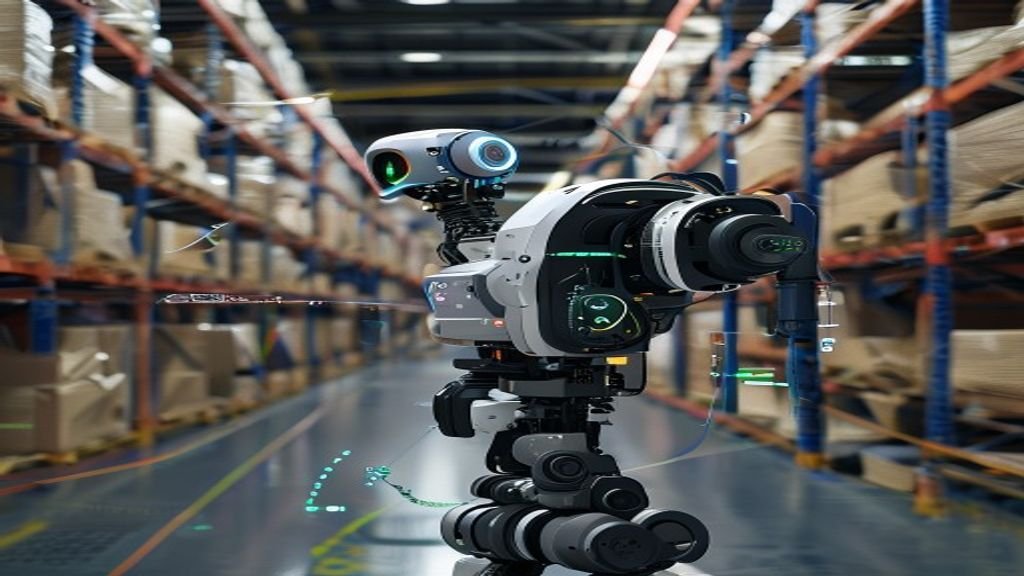
Robotics is where engineering meets real-world uncertainty. Whether you’re building a warehouse robot, a medical assistant, a drone for inspection, or a humanoid for research, success depends on more than clever algorithms. It depends on repeatable engineering practices: designing for reliability, validating safety, managing software complexity, and planning for scale.
In this guide, you’ll find best practices for robotics drawn from the realities of product development—field testing, hardware durability, maintainability, and operational safety. Use this as a playbook to reduce downtime, improve performance, and ship systems that perform consistently under changing conditions.
Start With a Clear Robotics Requirements Plan
Before you pick sensors, microcontrollers, or a motion planning stack, define the problem with precision. Many robotics projects fail because requirements are vague or continuously shifting.
Define the Operating Envelope
- Environment: indoor vs. outdoor, dust, vibration, temperature range, lighting, humidity, magnetic interference.
- Use cases: normal operation, edge cases, and failure scenarios.
- Constraints: payload limits, speed limits, power limits, communication bandwidth.
Translate Goals Into Measurable Metrics
- Accuracy: positioning error, perception confidence, detection recall/precision.
- Latency: perception-to-action timing, control loop frequency, end-to-end response time.
- Availability: mean time between failures (MTBF), mean time to recovery (MTTR).
- Safety: maximum allowable risk, safe braking distance, fault reaction time.
Plan for Iteration, Not Perfection
Robotics benefits from iterative engineering: build a minimal system, test early, learn quickly, then expand capability. A small prototype with measurable performance is far more valuable than a “perfect” architecture designed without field validation.
Design for Safety From Day One
Safety is not a late-stage checklist. It is an engineering discipline embedded in mechanical design, software architecture, and operational procedures.
Use a Layered Safety Strategy
- Prevent: mechanical safeguards, protective enclosures, collision-resistant layouts.
- Detect: collision sensors, proximity sensing, watchdogs, fault monitors.
- Respond: safe stop, controlled deceleration, fail-safe mode.
- Recover: defined restart conditions, safe re-initialization steps.
Implement Fault-Tolerant Control
In robotics, faults are inevitable: sensor dropout, encoder glitches, motor driver faults, network latency spikes. Build explicit fault detection and degrade gracefully.
- Watchdogs: monitor CPU load, sensor freshness, and control loop timing.
- Timeouts: treat missing sensor updates as faults, not as normal conditions.
- Fallback behaviors: switch to conservative navigation or manual mode.
Adopt Operational Safety Practices
- Define restricted zones and safety stop procedures.
- Train operators on emergency behaviors and recovery steps.
- Use maintenance checklists and calibration schedules.
Build a Robust Hardware Foundation
Hardware reliability is often the difference between a demo that works once and a product that works every day. Design for mechanical stress, electrical noise, and thermal cycling.
Prioritize Power Integrity and Electrical Noise Control
- Power distribution: use proper regulators, decoupling capacitors, and fusing.
- Grounding: avoid ground loops; use star grounding where appropriate.
- EMI/EMC: shield cables, use twisted pairs for high-noise signals, filter motor noise.
Choose Sensors That Match Real-World Conditions
Sensor selection should reflect the operational environment—not just lab performance.
- Lighting variability: ensure vision sensors handle glare and low-light conditions.
- Materials and geometry: reflectivity, texture, and occlusion affect perception.
- Range requirements: match LiDAR/ultrasonic/camera range to planning needs.
Tip: build a dataset from your actual environment early. The “best” model in a benchmark may fail when surfaces look different in your real world.
Account for Mechanical Wear and Vibration
- Mounting: rigid mounts reduce sensor drift and calibration loss.
- Fasteners: use thread-lockers or locking nuts; check torque specs.
- Belts and gears: plan for wear, lubrication, and replacement intervals.
- Flexibility: manage cable routing to avoid fatigue.
Adopt a Scalable Robotics Software Architecture
As capabilities grow, software complexity becomes the primary bottleneck. A scalable architecture keeps perception, planning, control, and communications manageable.
Use Modular Components With Clear Interfaces
- Perception module: sensor preprocessing, detection/tracking, localization estimates.
- Planning module: path generation, obstacle avoidance, task scheduling.
- Control module: motion control loops, safety constraints, actuator commands.
- System management: mode switching, diagnostics, logging, configuration.
Define interfaces such as input/output message schemas, timing expectations, and error states.
Design for Real-Time Performance
- Separate concerns: run high-rate control loops independently of slower perception.
- Bound latency: prevent unbounded queues that cause stale decisions.
- Profile early: measure CPU/GPU utilization and timing under worst-case scenarios.
Make Configuration Reproducible
Robotics experiments often become impossible to reproduce if configurations change silently. Use versioned configuration files, explicit model versions, and controlled parameter sets.
- Track sensor calibration files as artifacts.
- Store planning/control parameters by release.
- Record environment assumptions (map versions, reference frames).
Build a Comprehensive Testing and Validation Strategy
Testing is where “it works” becomes “it works reliably.” Combine simulation, hardware-in-the-loop (HIL), and field testing.
Use Simulation for Early Learning
- Validate kinematics and collision geometry.
- Stress-test planners against randomized obstacles.
- Test perception pipelines under synthetic variations (noise, lighting, occlusion).
Simulation won’t replace real tests, but it accelerates iteration and helps you catch logic errors before expensive deployments.
Employ Hardware-in-the-Loop (HIL) When Control Matters
HIL tests verify that your control code behaves correctly with realistic timing, sensor models, and actuator constraints.
- Test control stability under load variations.
- Validate sensor-to-control timing and filtering.
- Confirm fail-safe responses to simulated faults.
Conduct Field Trials With a Structured Plan
- Progressive rollout: start with controlled routes and expand coverage.
- Coverage metrics: test more than just nominal paths; include corners, blind spots, and congestion.
- Repeatability: run the same scenarios multiple times to measure variance.
Invest in Data, Logging, and Observability
Robots are complex systems. When failures occur, you need more than guesswork—you need evidence. High-quality logging turns troubleshooting from an art into an engineering process.
Log the Right Signals
- Sensor health: timestamps, confidence scores, dropout rates.
- State estimation: localization pose and covariance.
- Planner decisions: chosen trajectories, costs, and replan triggers.
- Control outputs: commanded velocities, actuator currents, and saturation events.
Use Traceable Event Timelines
Create event timelines that show what the robot knew and when. For example: “Object detected at time T, localization updated at T+Δ, planner switched at T+2Δ, safety stop triggered at T+3Δ.”
Build Tools for Post-Mortem Analysis
- Replay logs in a synchronized viewer.
- Overlay sensor data, maps, and trajectories.
- Summarize failure categories (perception vs. planning vs. control vs. comms).
Manage Calibration, Localization, and Mapping Carefully
Calibration and state estimation are foundational. If these are inconsistent, perception and planning can become unreliable even when algorithms are strong.
Establish a Calibration Lifecycle
- Initial calibration: document procedures and expected tolerances.
- Periodic calibration: schedule based on usage hours or mechanical changes.
- Event-driven recalibration: trigger after hardware replacement or structural modifications.
Handle Localization Uncertainty Explicitly
Don’t treat localization as a single deterministic number. Use uncertainty estimates to inform planning and safety actions.
- Increase caution when uncertainty grows.
- Replan or request operator intervention when confidence drops below thresholds.
Maintain Map and Frame Integrity
- Version your maps and coordinate transforms.
- Ensure sensor mounting changes update transform parameters.
- Detect map mismatch conditions and fail gracefully.
Implement Secure and Reliable Communications
Robots rely on networks for remote monitoring, fleet management, and sometimes direct control. Communications issues can quickly become safety issues.
Assume Connectivity Will Degrade
- Use local autonomy as the default when links drop.
- Implement reconnection logic with backoff strategies.
- Rate-limit non-critical messages to preserve bandwidth.
Secure Your Robotics Stack
- Use authentication for commands and telemetry.
- Encrypt sensitive data in transit.
- Maintain an update strategy for security patches.
Plan for Maintainability and Fleet Operations
When you move from a single robot to multiple units—or from a prototype to a long-term product—maintainability becomes critical. Your best practice here is to design for technicians, not just engineers.
Make Diagnostics Easy to Access
- Surface key metrics: battery health, motor temperatures, sensor dropout counts.
- Provide actionable error codes with recommended steps.
- Support remote log upload to reduce on-site debugging.
Design for Safe Updates and Rollbacks
- Use staged rollouts to limit risk.
- Keep a rollback version available in case of unexpected behavior.
- Ensure update processes respect safe mode requirements.
Build a Spare Parts and Calibration Plan
- Identify parts with predictable wear patterns (belts, bearings, cable assemblies).
- Stock critical spares to minimize downtime.
- Document replacement procedures and recalibration steps.
Follow Strong Development Practices: Versioning, CI/CD, and Reviews
Robotics development benefits massively from disciplined software engineering. Treat robotics code like production software, not experimental scripts.
Use Version Control and Code Reviews
- Require pull requests with review checklists (timing, safety, edge cases).
- Track dependencies and library versions carefully.
- Maintain consistent coding standards across modules.
Run Automated Tests for Core Logic
- Unit tests for perception preprocessing and message parsing.
- Simulation-based tests for planners and controllers.
- Regression tests for known failure scenarios.
Adopt Continuous Integration for Build and Packaging
CI pipelines can verify builds, run linting, and package artifacts. For robotics, add tests that check for timing regressions and configuration compatibility.
Optimize Perception for Practical Robustness
Perception is often the most visible part of a robot—yet it can be the least reliable if trained only for ideal conditions. Best practices focus on robustness.
Train and Validate on Real Data
- Collect data from your environment with your hardware setup.
- Include the worst-case lighting and occlusion you expect.
- Label carefully where accuracy matters most.
Use Confidence and Uncertainty Estimates
- Use probability thresholds appropriately.
- Trigger replanning or safe stop when confidence drops.
- Log perception outputs for post-mortem analysis.
Design Perception Outputs for Control
Planning and control need actionable outputs. Prefer representations that include geometry and timing—e.g., tracked objects with velocities, pose estimates with uncertainties, and consistent coordinate frames.
Use Motion Planning and Control With Safety Constraints
Even perfect perception will fail if motion planning and control ignore constraints. Best practices enforce safety and physical feasibility.
Respect Kinematic and Dynamic Limits
- Model actuator limits, acceleration bounds, and jerk constraints.
- Account for terrain or floor friction changes.
- Validate braking performance under the worst load conditions.
Plan Around Uncertainty
- Use conservative safety margins when localization is uncertain.
- Inflate obstacles based on sensor noise and dynamic uncertainty.
- Replan when new sensor data contradicts prior assumptions.
Make Safety Constraints Non-Negotiable
Safety constraints should be implemented such that they cannot be overridden by higher-level logic during unexpected states. This is a key robotics best practice for preventing catastrophic outcomes.
Document Everything: Decisions, Assumptions, and Learnings
Documentation is not bureaucracy—it’s the memory of your team. Robotics projects require many iterations, and even small changes can have big effects.
Track Assumptions
- What map assumptions does navigation rely on?
- What calibration values are expected to hold within tolerances?
- What sensor artifacts are treated as normal vs. faults?
Maintain an Engineering Playbook
Create repeatable procedures for:
- Sensor calibration
- Common troubleshooting steps
- Known failure scenarios and mitigation strategies
- Release and rollback processes
Common Pitfalls to Avoid
Even with good intentions, teams can fall into patterns that harm reliability. Here are frequent pitfalls in robotics development.
- Overfitting to demos: optimizing performance for the showroom route instead of real operations.
- Ignoring timing: building algorithms that work in recorded logs but fail under real-time constraints.
- Underestimating calibration drift: not accounting for vibrations, temperature, or mechanical changes.
- Weak fault handling: assuming sensors never drop and networks never fail.
- Insufficient observability: lack of logs and unclear metrics delays root-cause analysis.
A Practical Checklist for Robotics Best Practices
Use this condensed checklist when planning your next milestone:
- Requirements: measurable metrics for safety, accuracy, latency, and availability.
- Safety: layered safety mechanisms, fault detection, and safe response behaviors.
- Hardware: power integrity, EMI control, mechanical durability, and wear planning.
- Software architecture: modular components, bounded latency, reproducible configuration.
- Testing: simulation + HIL + structured field trials with repeatable scenarios.
- Observability: logging of sensor health, state estimation, planning decisions, and control outputs.
- Calibration and localization: lifecycle management and explicit uncertainty handling.
- Operations: maintainable diagnostics, safe update/rollback, and fleet-ready processes.
Conclusion: Reliability Is a System Property
The best practices for robotics don’t belong to a single discipline. They span requirements, safety engineering, hardware design, software architecture, testing, data logging, calibration, and operations. When you integrate these practices, your robots become more than capable—they become dependable.
Start small: define measurable goals, implement safety and logging early, validate under real conditions, and build an iteration loop you can sustain. Over time, these practices will compound—turning experimentation into a robust engineering process that delivers robotics solutions you can trust.