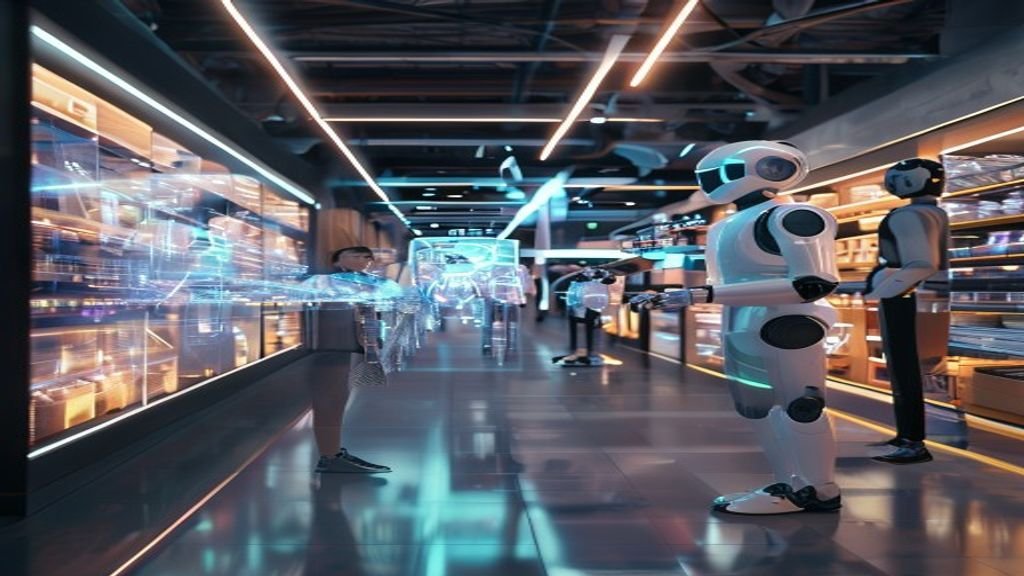
Robotics is no longer confined to factory floors or futuristic science labs. It’s entering marketing workflows—reshaping how brands capture attention, personalize experiences, fulfill orders, and build trust. For marketers, the rise of robotics isn’t just about adopting new technology; it’s about learning new customer journeys where physical interaction, automation, and data-driven decision-making converge.
In this article, we’ll explore the most important future of robotics trends and practical predictions for marketers. You’ll see how robots will influence everything from campaign strategy to measurement, from retail experiences to compliance, and why the competitive advantage will shift toward teams that can integrate automation with storytelling and empathy.
Why Robotics Matters to Marketers Now
Historically, marketing focused on digital touchpoints—ads, emails, landing pages, and social content. But robotics is expanding the marketing surface area into the real world. As service robots, warehouse robots, and autonomous systems become more capable, they create new moments where customers form impressions of brands.
These impressions can be positive (effortless assistance, faster fulfillment, more consistent in-store experiences) or negative (confusing interactions, perceived lack of transparency, or friction caused by automation). The brands that win will be those that treat robotics as a customer experience tool, not merely an operational upgrade.
Trend #1: Service Robots Entering Customer Journeys
The clearest near-term shift is the move from back-of-house automation to customer-facing robotics. Retail, hospitality, healthcare, and even event spaces are beginning to adopt service robots to guide customers, answer questions, deliver items, and improve operational flow.
What marketers should watch
- In-store wayfinding and concierge bots: Robots that route customers to products or services based on intent.
- Interactive demos and product education: Robots that explain features, show usage, or personalize recommendations.
- Personalized delivery and post-purchase support: Robots that provide updates or bring items to the customer.
Marketing implications
When a robot becomes part of the journey, your brand becomes the experience. Marketers will need to collaborate with product teams and UX designers to ensure the robot’s behavior matches brand voice, tone, and values.
Prediction: In the next few years, robotics-driven customer assistance will become a differentiator for brands that invest in conversational design, real-time context, and accessible interaction patterns (voice, screens, and gesture-friendly interfaces).
Trend #2: Hyper-Personalization Powered by Robotics Data
Robots generate rich behavioral and operational data—movement patterns, interaction outcomes, response preferences, dwell times, and frequently asked questions. While privacy and consent will be critical, responsibly collected data can enable unprecedented personalization.
Key capabilities driving personalization
- Real-time contextual awareness: Robots can adapt responses based on where a customer is, what they’re viewing, and what actions they take.
- Object recognition and product intelligence: Vision-based systems can identify items, compare options, and guide selection.
- Automation of “micro-moments”: Robots can respond instantly to questions that previously required staff time.
Marketing implications
Personalization is no longer limited to cookies and clickstream data. It will include physical-world signals. That means marketers must rethink targeting and segmentation models to include interaction intent and journey stage inferred from robot-assisted behaviors.
Prediction: Marketers will shift from campaign-level personalization to interaction-level personalization, using automation to tailor messaging and offers at the exact point of need.
Trend #3: Robotics-Friendly Commerce and Faster Fulfillment
Fulfillment is becoming a marketing channel. When robots improve speed, accuracy, and cost efficiency, customers feel it immediately—through delivery promises, fewer errors, and more consistent availability of products.
Robotics impacts on the customer promise
- Same-day and on-demand delivery: Warehouse and picking robots reduce processing time.
- Reduced stockouts: Better inventory accuracy and routing can improve product availability.
- Lower return rates: Improved picking and verification can reduce order mistakes.
Marketing implications
Your marketing messaging must align with operational reality. If you advertise fast delivery but robotics-related constraints cause delays, trust erodes quickly. Conversely, if robots enable reliably fast fulfillment, marketing becomes more credible and more persuasive.
Prediction: Delivery experience will become a core part of brand storytelling, measured and optimized like any other campaign KPI.
Trend #4: AI + Robotics = Smarter Creative and Production Cycles
Robotics doesn’t only affect distribution and service; it also changes how content is produced and localized. Autonomous systems and AI-driven workflows can accelerate creative operations—from generating product visuals to coordinating on-location capture.
Examples of robotics-assisted marketing production
- Automated content capture: Robots and mobile imaging systems gather product and environment data for faster creative iteration.
- Dynamic merchandising: In-store display robots can reorder or adapt promotions based on real-time performance.
- Event and experiential marketing: Robotic lighting, signage, and interaction systems can adjust scenes based on crowd behavior.
Prediction: Marketing teams will move toward faster test-and-learn cycles where content and in-world experiences are adjusted dynamically, not just scheduled.
Trend #5: Measurement Will Expand Beyond Clicks to “Robotic Touchpoints”
Classic marketing measurement—impressions, CTR, conversion rate—won’t disappear, but it will be complemented by new metrics. Robotics creates physical interactions that resemble customer service events and product education experiences.
Metrics marketers should begin to model
- Interaction completion rates: Did the customer get the answer or service they needed?
- Sentiment and friction: Did the interaction reduce confusion or increase it?
- Time-to-intent: How quickly does a customer reach the next step in the journey?
- Attribution across channels: Did the robot-assisted experience influence later online behavior?
Marketing implications
To measure effectively, marketers will need better integration between robotics systems, CRM platforms, web/app analytics, and customer feedback tools. This requires governance and data architecture—often a bigger challenge than the technology itself.
Prediction: Attribution models will evolve toward hybrid measurement that incorporates offline and robotic touchpoints, using privacy-preserving methods.
Trend #6: Safety, Trust, and Transparency Become Brand Differentiators
As robots engage customers, safety and trust move from technical concerns to brand concerns. If customers feel that interactions are opaque, biased, or unsafe, they’ll disengage.
Trust-building elements marketers can influence
- Clear disclosure: Let customers know when they are interacting with a robot.
- Accessible design: Support multiple interaction modes (voice, text, screens) and ensure inclusivity.
- Consistent escalation paths: Offer an easy way to reach a human employee when needed.
- Brand-aligned tone: Robots should reflect your voice and values—calm, helpful, and respectful.
Prediction: Brands that treat transparency and safety as part of brand experience—not just compliance—will gain long-term customer loyalty.
Trend #7: Robotics Platforms and Partner Ecosystems
Most marketers won’t build robots from scratch. The future will be about platforms, integrations, and partner ecosystems: robotics-as-a-service, pre-built software stacks, and marketing-friendly dashboards that connect with existing tools.
What to prioritize when selecting partners
- Integration capabilities: Can the solution connect to your CRM, analytics, and identity systems?
- Customization flexibility: Can you adapt behavior, messaging, and workflows to your brand?
- Governance support: Does the vendor provide logging, audit trails, and role-based controls?
- Deployment model: Cloud vs. on-prem requirements and update cadence.
Prediction: The winners won’t be the teams with the most robotic hardware; they’ll be the teams with the most effective marketing-robot integration.
How Marketers Should Prepare: A Practical Roadmap
Robotics adoption can feel overwhelming. The best approach is iterative: start with a small, measurable use case that improves experience or efficiency, then expand. Here’s a roadmap that marketing leaders can follow.
Step 1: Identify high-impact customer moments
Look for moments where customer intent is high and frustration is common, such as:
- Getting product information quickly
- Reducing wait times
- Improving wayfinding in physical spaces
- Handling repetitive questions
Step 2: Define success metrics before deployment
Choose KPIs that reflect both marketing outcomes and experience quality. Examples:
- Conversion rate lift from robot-assisted product discovery
- Reduction in support tickets for specific issues
- Higher satisfaction scores for in-store assistance
Step 3: Build brand guidelines for robotic interactions
Robots speak and behave. That means you need a playbook:
- Approved tone and vocabulary
- Escalation rules to humans
- Handling of sensitive topics and accessibility needs
Step 4: Ensure data governance and consent
Robotics can involve cameras, sensors, and biometrics depending on the use case. Establish:
- Customer consent and disclosure practices
- Data retention policies
- Audit and compliance workflows
Step 5: Run controlled pilots and refine rapidly
Start small. Pilot with a segment, measure outcomes, iterate on conversational flows, and scale only when the experience is consistent and safe.
Use Cases Marketers Can Start Planning for Today
To make robotics feel concrete, here are several high-potential use cases marketers should consider.
1) Robot-assisted product discovery
Customers describe needs; robots recommend options, show availability, and route shoppers to sections. This reduces time-to-intent and improves product education.
2) In-store promotions that adapt to behavior
Robots can trigger offers based on where a customer is and what they’re viewing—while still respecting privacy and consent.
3) Post-purchase support and onboarding
Robots can help customers set up products, access tutorials, and resolve basic issues. This boosts retention and reduces support costs.
4) Event experiences and brand activations
Interactive robotic displays can personalize experiences at scale—without the staffing burden of manual personalization.
Potential Risks (and How to Mitigate Them)
Robotics offers immense opportunity, but marketers must anticipate risks—especially in perception and customer trust.
Common risks
- Frustration from poor conversational design: If the robot can’t interpret needs, customers will abandon.
- Bias and inaccurate recommendations: AI-driven behavior can produce unfair outcomes.
- Privacy concerns: Sensor-heavy experiences can feel invasive.
- Brand misalignment: A robot that “acts” wrong damages trust.
Mitigation strategies
- Design for human escalation and safe fallback paths
- Use rigorous testing across demographics and edge cases
- Adopt privacy-preserving data practices
- Train robotics UX with brand guidelines and tone-of-voice standards
Prediction: As robotics becomes more common, customer expectations will rise. Brands that treat robustness and trust as part of the marketing experience will outperform those that treat robotics as a novelty.
The 2026-2030 Robotics Marketing Outlook
So what does the future look like for marketers? Here are realistic predictions shaped by current technology trajectories.
Prediction 1: Robotics becomes a standard layer of experience
Robots won’t replace marketers, but they will become part of how brands deliver value. Expect more hybrid experiences where digital marketing triggers real-world robotic assistance.
Prediction 2: The customer journey becomes more physical, more interactive, and more measurable
Journey stages will include robotic touchpoints with measurable outcomes like time-to-intent and assistance satisfaction.
Prediction 3: Brand differentiation shifts toward “experience orchestration”
Marketers will win by coordinating messaging, automation, and service design into a cohesive journey—rather than relying solely on ad spend or static content.
Prediction 4: Trust and transparency become core brand KPIs
Feedback loops from robotics interactions will influence brand perception directly. Companies will monitor trust metrics like perceived helpfulness, clarity, and willingness to continue.
Prediction 5: Marketing-operations alignment will be mandatory
Because robotics impacts fulfillment speed and service reliability, marketing teams will need to work closely with operations, supply chain, and CX to keep promises accurate.
Conclusion: The Marketer’s Role in the Robotic Era
The future of robotics isn’t just about machines moving through warehouses or serving customers. It’s about how brands feel at every step—before purchase, during discovery, in delivery, and after support. Robotics will expand the definition of marketing from communications to experience design.
Marketers who prepare now—by choosing high-impact use cases, establishing measurement frameworks, and building trust-focused interaction guidelines—will be positioned to lead. The brands that treat robotics as a tool for empathy, clarity, and convenience will turn automation into lasting loyalty.
Next step: Identify one customer journey moment where friction is high, then test a robotics-assisted solution with clear success metrics. In the robotic era, speed matters—but so does intention.